Epos of Ashes
A cooperative multiplayer survival adventure for 1-4 players. Build, explore, and survive across four unique biomes in a world risen from ashes.
Epos of Ashes began as an exploration of modern multiplayer game development with Unity. What started as a technical challenge evolved into a comprehensive survival experience that combines action, strategy, and cooperative gameplay.
The game drops players into a post-catastrophe world where survival depends on resource management, strategic building, and teamwork. Each of the four biomes presents unique environmental challenges and rewards, encouraging players to adapt their strategies as they progress.
Four Distinct Worlds
Summer
Lush forests rich with resources serve as the starting point, teaching core survival mechanics in a forgiving environment.
Winter
Frozen landscapes introduce temperature management and limited visibility, demanding careful planning and resource conservation.
Desert
Extreme heat and scarce water sources create a harsh environment where every decision matters for survival.
Valley
The final frontier combines all previous challenges with powerful enemies and rare treasures for those who master the game.
Expanding Horizons
Three additional biomes are in early design phase: Tropical Island with dense jungle ecosystems and coastal challenges, Savanna featuring vast plains and roaming predators, and Volcano bringing extreme heat mechanics and rare volcanic resources. Each will expand the world's diversity and offer unique gameplay opportunities.
The Survival Loop
At its core, the game revolves around a tight gameplay loop: explore to gather resources, craft tools and weapons, build defensive structures, then venture deeper for better materials. This cycle escalates naturally as players unlock new biomes, each introducing mechanics that build upon previous lessons.
Multiplayer adds a strategic layer where players can specialize in different roles—whether focusing on combat, resource gathering, or base building. The seamless drop-in/drop-out system ensures sessions remain flexible while maintaining progression for all participants.
Dynamic Threat System
The world isn't passive. At the heart of each player's camp sits a mysterious Generator—a remnant of the old world that provides power but attracts unwanted attention. This device pulses with energy, keeping your base operational while simultaneously broadcasting your location to hostile creatures.
Periodically, waves of enemies converge on your position, drawn by the Generator's signature. These aren't scripted encounters—the system dynamically spawns threats based on your progression, biome location, and time survived. Early waves might consist of a handful of basic creatures testing your defenses. Later assaults bring coordinated groups with varied enemy types, requiring strategic fortification and team coordination to repel.
The Generator creates a compelling tension: do you strengthen defenses and weather the storm, or venture out during lulls to gather resources before the next wave? Every decision matters when your camp is constantly under threat.
Development Journey
Multiplayer Architecture
Building a stable multiplayer experience was the project's biggest technical challenge. Synchronizing 20+ game systems across multiple clients required careful architecture decisions. I implemented a master-client pattern with Photon PUN 2, creating specialized sync scripts for combat, building, crafting, and inventory systems.
The result is seamless 4-player co-op with sub-50ms latency and reliable state synchronization across all gameplay elements.
Performance Optimization
Early playtests revealed significant FPS drops in the Summer biome due to dense vegetation. Rather than compromise the visual design, I implemented GPU instancing for all foliage, developed a 3-tier LOD system, and optimized draw calls through aggressive batching.
These optimizations maintained a stable 60 FPS even on mid-range hardware while preserving the lush, detailed environments that define each biome's character.
Modular System Design
Using Game Creator 2 as a foundation, I built a modular architecture where combat, crafting, building, and inventory systems operate independently but communicate through a centralized event system. ScriptableObjects serve as data containers, allowing rapid iteration without code changes.
This approach enabled fast prototyping and made the codebase maintainable as a solo developer, with clear separation of concerns across 50+ scripts.
Key Learnings & Reflections
Building Epos of Ashes solo taught me that scope management isn't about limiting ambition—it's about strategic sequencing. The 13-phase, 60-week roadmap became more than a planning tool; it was a constant reality check that kept the project moving forward rather than sprawling endlessly.
Early performance testing proved invaluable. Retrofitting optimization is painful; building it in from the start is a minor upfront cost that pays dividends throughout development. GPU instancing and LOD systems weren't afterthoughts—they were foundational decisions that shaped how I approached environment design.
Iteration Over Perfection
Quick prototypes revealed more problems than extensive planning ever could. The first combat system was clunky, the initial building mechanics confusing. Each iteration improved based on real feedback rather than theoretical design.
Modularity as a Multiplier
Treating each system—combat, crafting, building—as an independent module made debugging trivial and feature addition straightforward. Changes rarely cascaded into unexpected side effects.
Documentation for Future Self
Six months into development, I couldn't remember why certain systems worked the way they did. Comprehensive inline documentation and architecture diagrams became lifesavers during later phases.
User Experience First
Features don't matter if players can't intuitively use them. Multiple playtesting sessions led to complete UI overhauls that transformed complex systems into approachable mechanics.
Current Status & Next Steps
The project is currently in Phase 1, with core multiplayer systems, character mechanics, and the Summer biome operational. The foundation is solid—combat feels responsive, building is intuitive, and multiplayer synchronization is stable.
Upcoming phases focus on the remaining three biomes, weather integration, and the quest system. An early access demo featuring the Summer biome is planned once Phase 5 (UI/UX polish) is complete, allowing community feedback to shape later development priorities.
Visual Showcase
Epos of Ashes
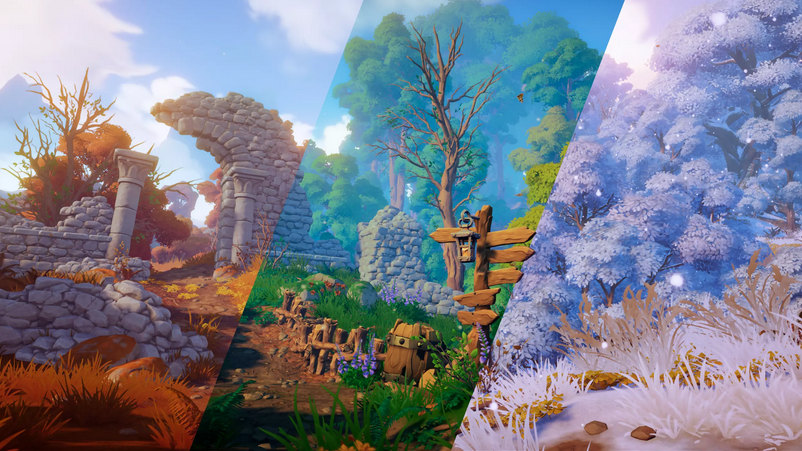
Biome Impressions
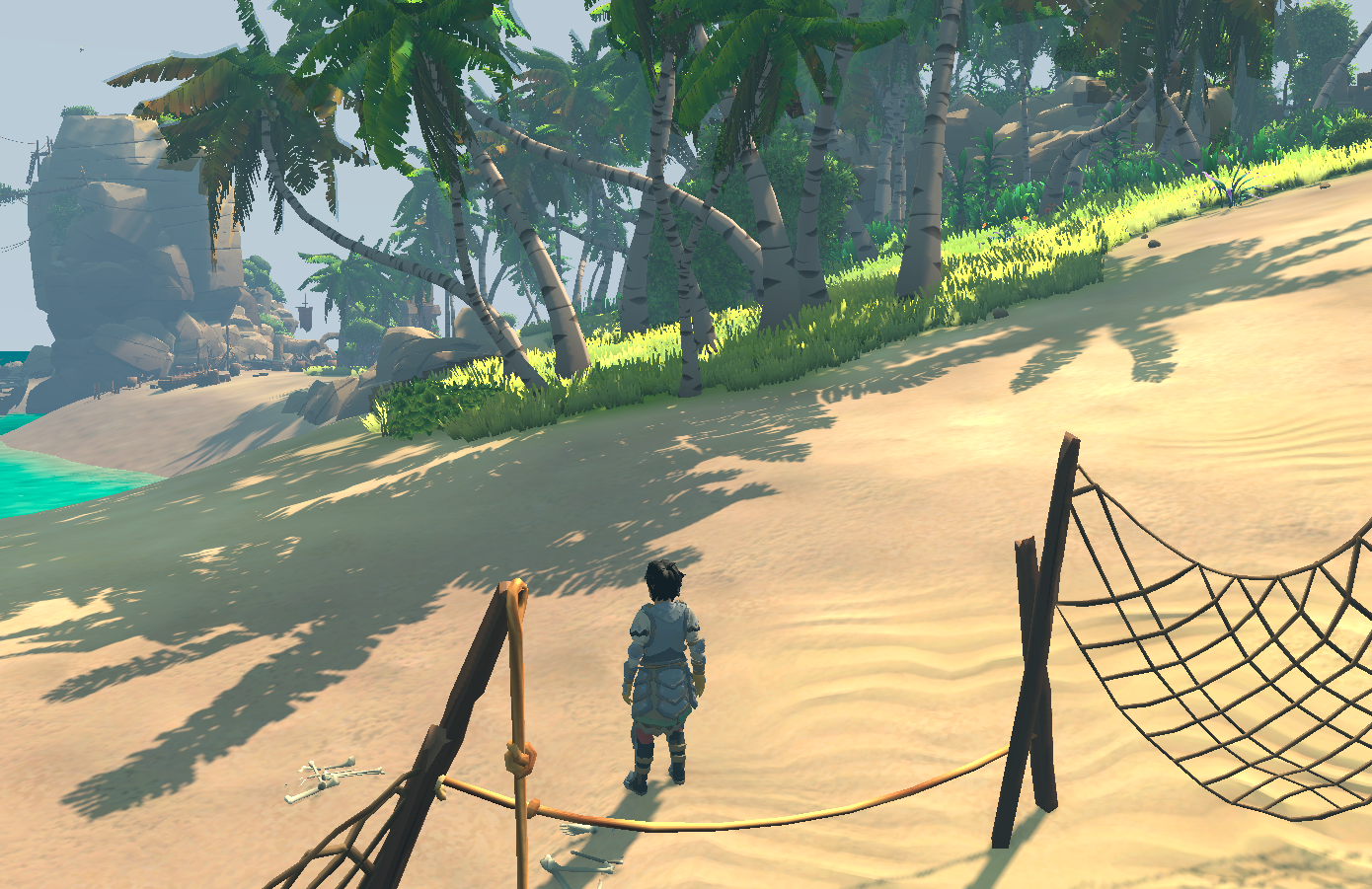
Tropical Island - Expansion Idea
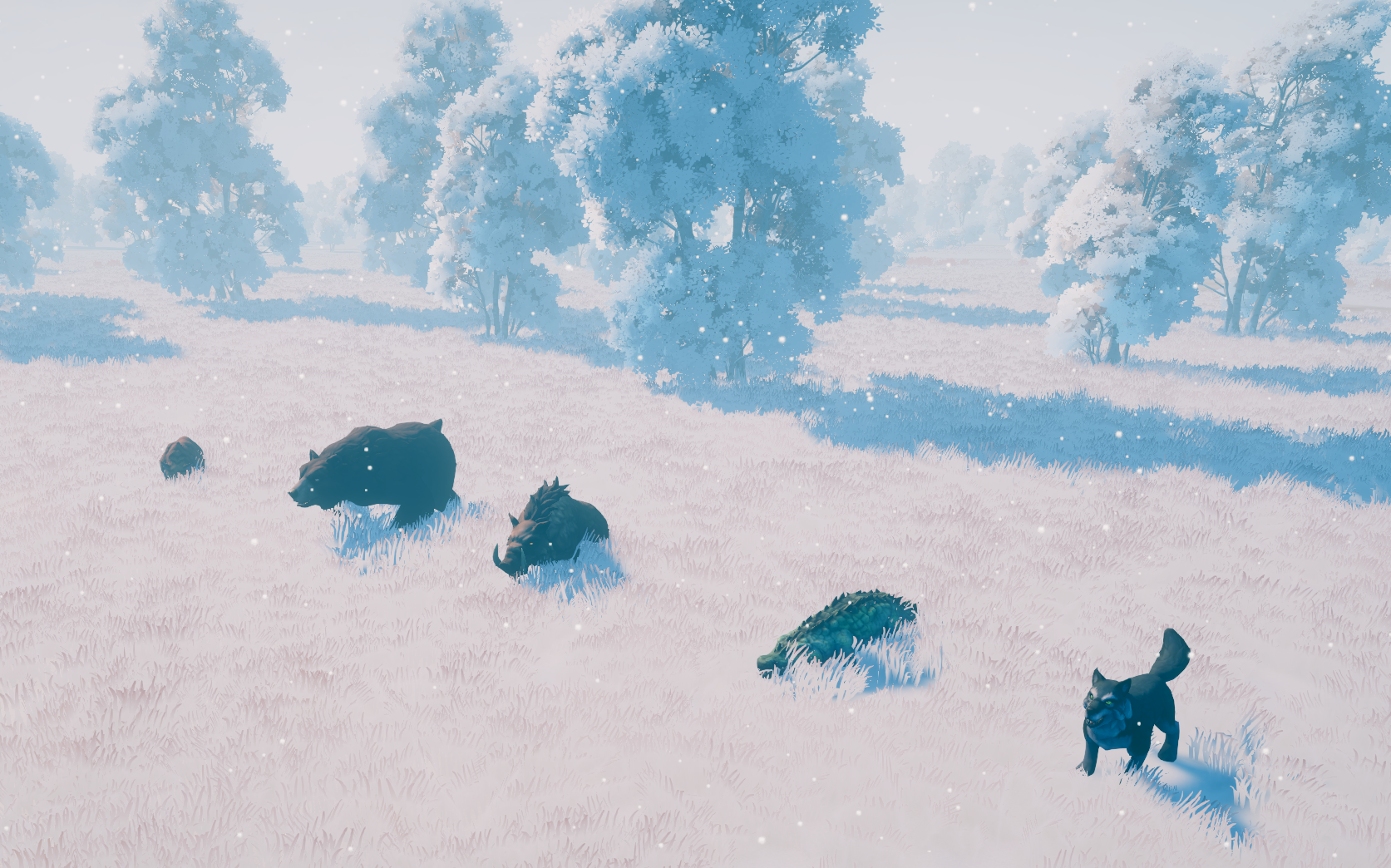
Introducing - Roaming Enemies
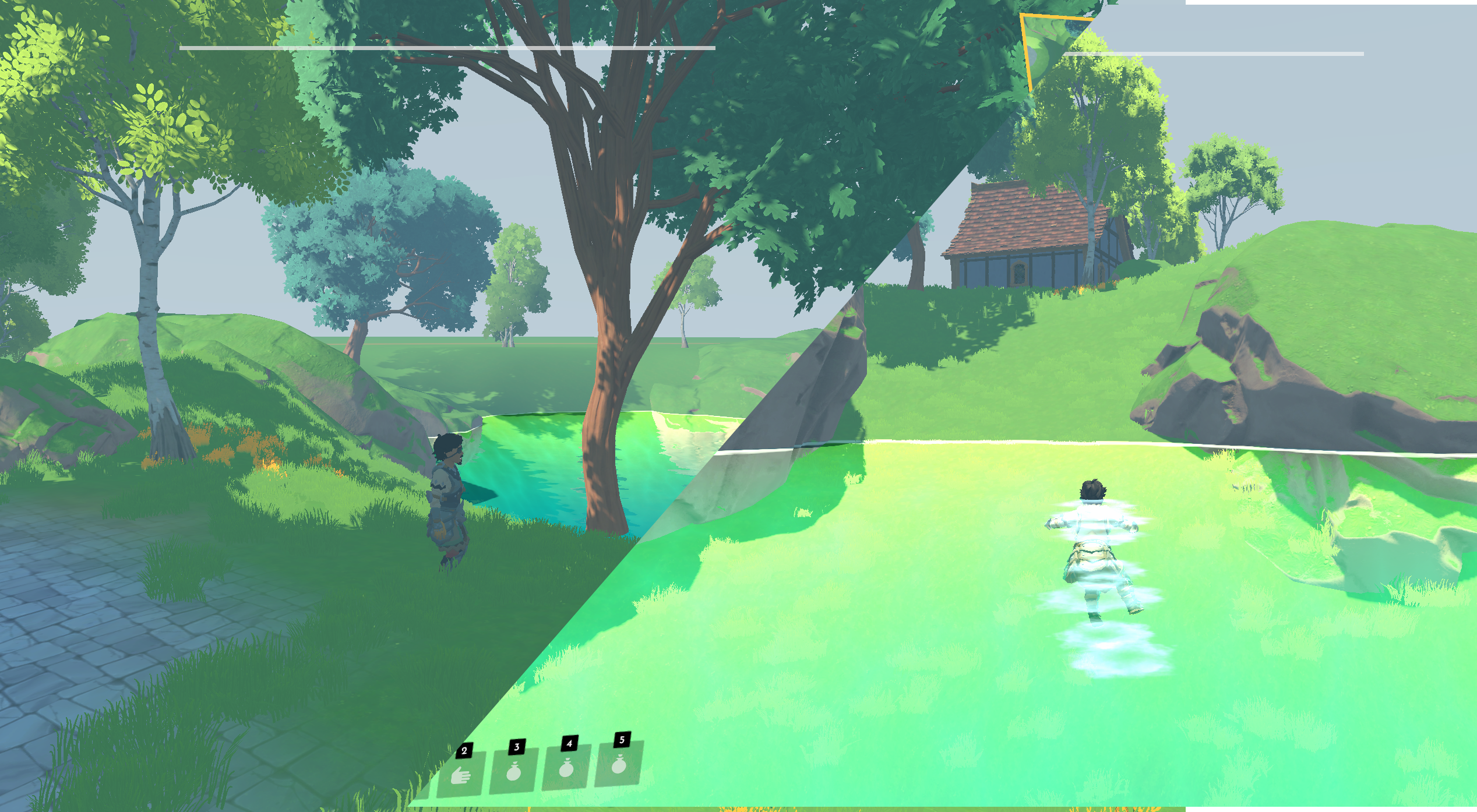
Explore - Swimming capabilities
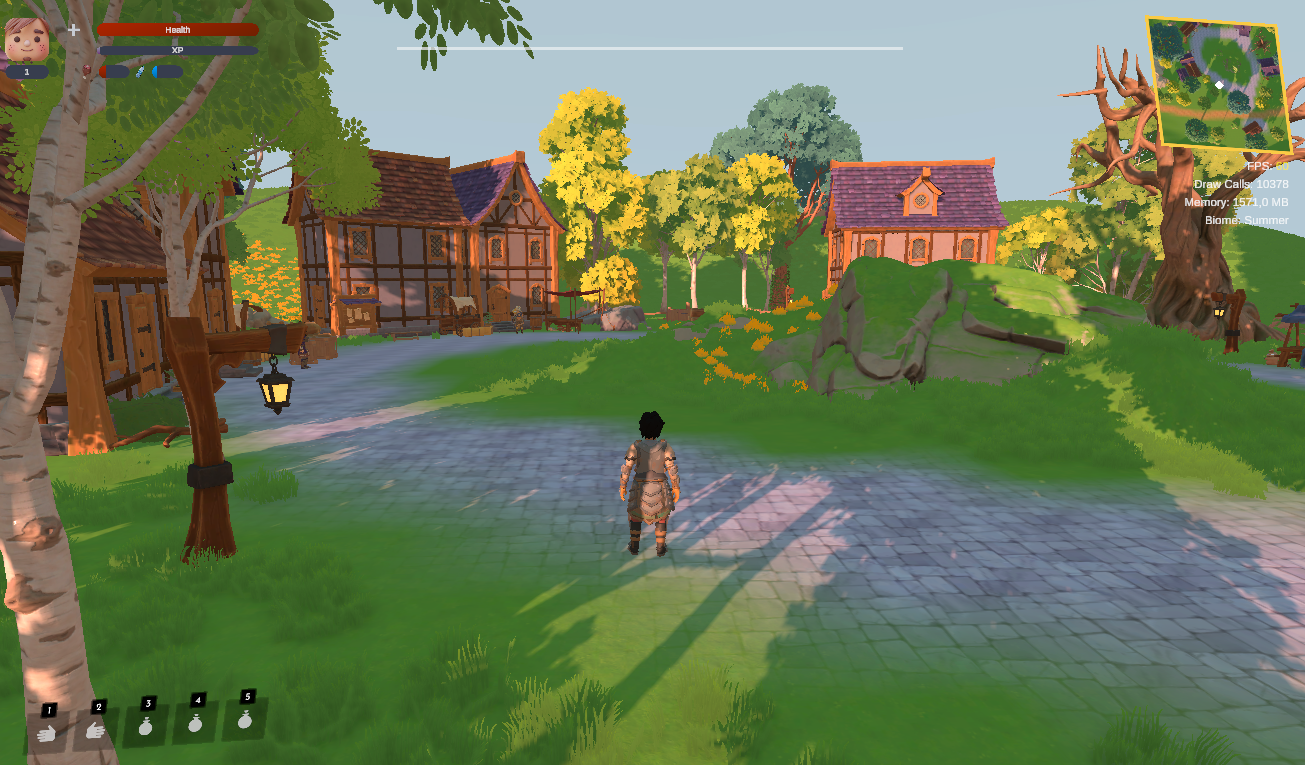
Point of Interest - First Market announced